


THE KHOKBAWA MODEL
Traditional biomass industries often rely on large centralized factories. While effective in some sectors, this model can limit scalability when biomass resources are spread across rural regions.
Khokbawa is developing a different approach.
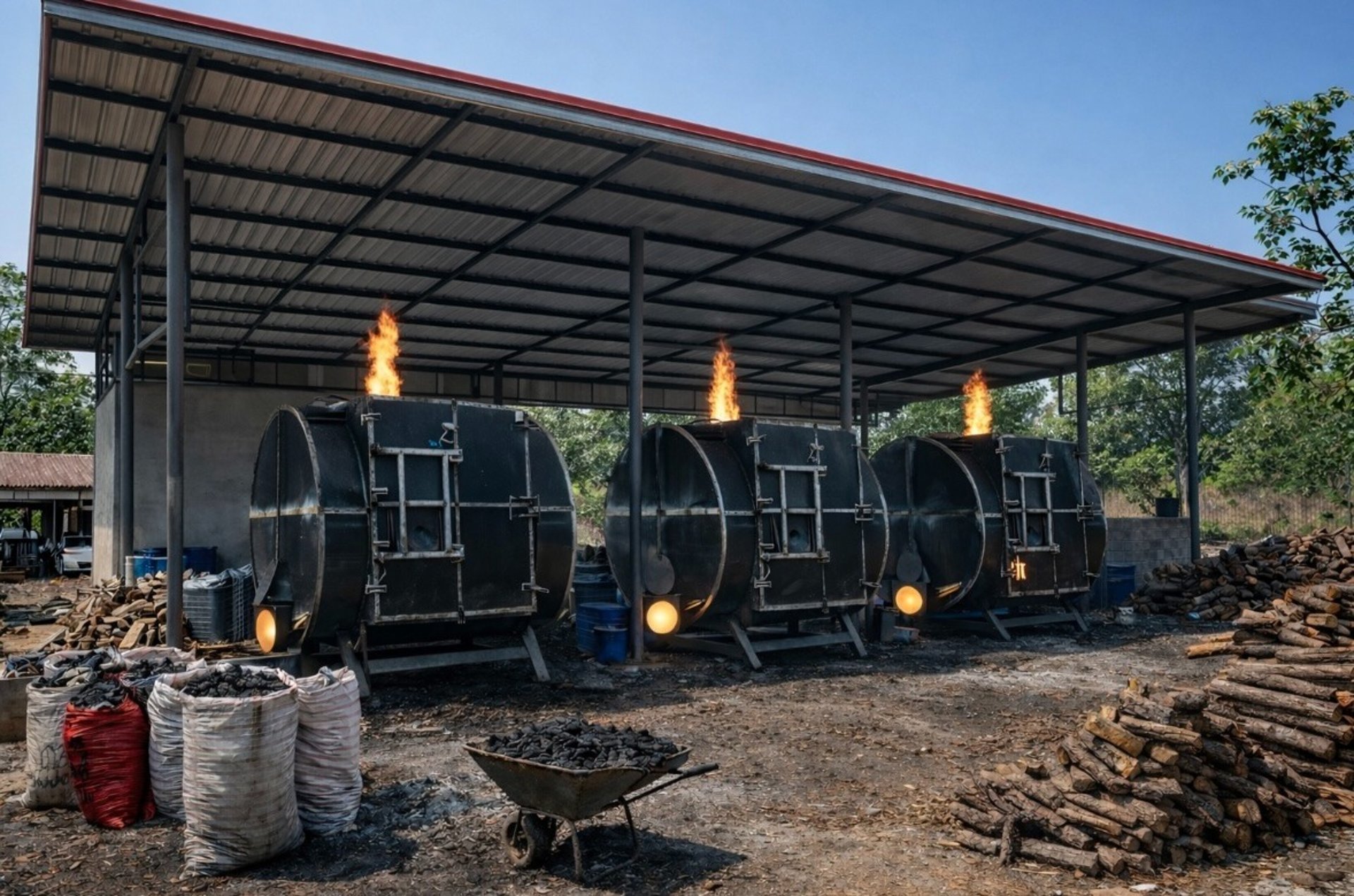
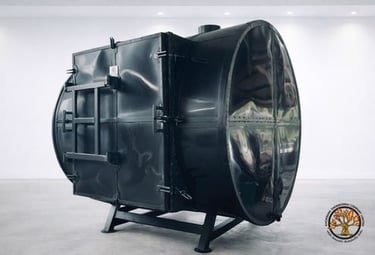
Instead of concentrating production in a few industrial plants, the company deploys pyrolysis systems directly in biomass-rich areas, allowing agricultural residues to be transformed close to their source.
This creates a distributed production network connecting local communities, entrepreneurs, and agricultural cooperatives with national and international markets.
A Distributed Biomass Production Network
Local biomass


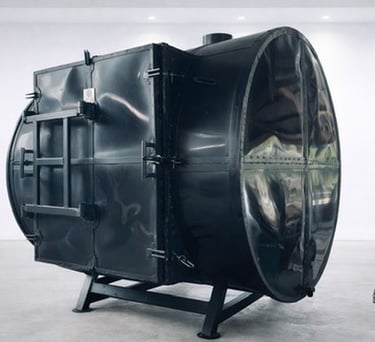
Khokbawa furnace
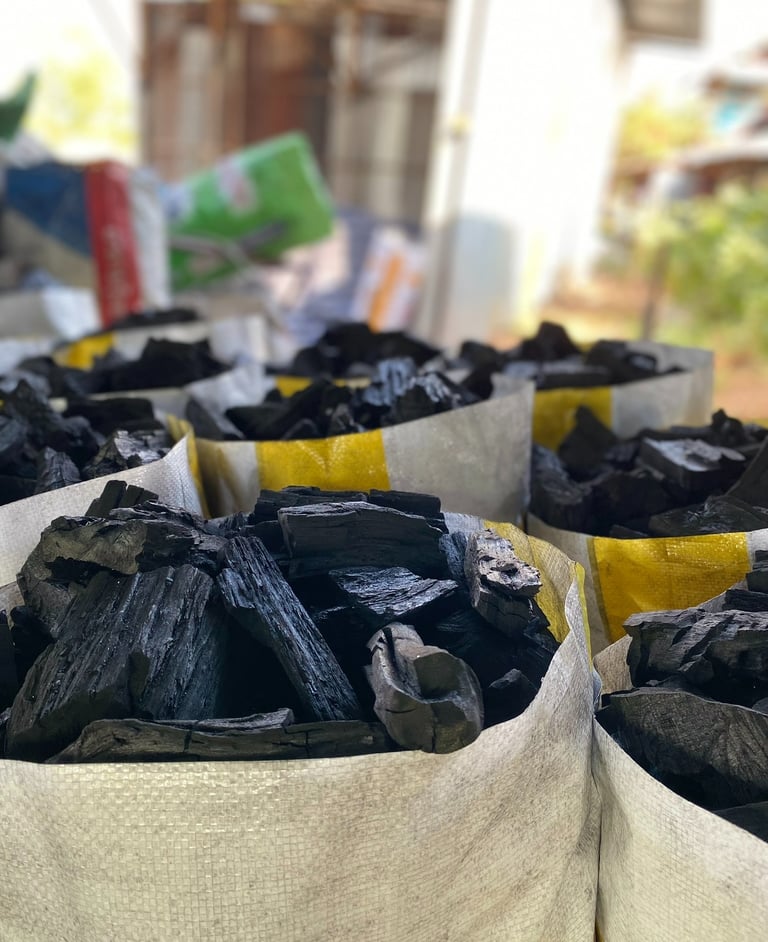
Charcoal / Biochar
production



Khokbawa logistics
Khokbawa brand & export
Community Production
Across Thailand, large quantities of agricultural residues are produced every year, including wood waste, bamboo, and other biomass materials.
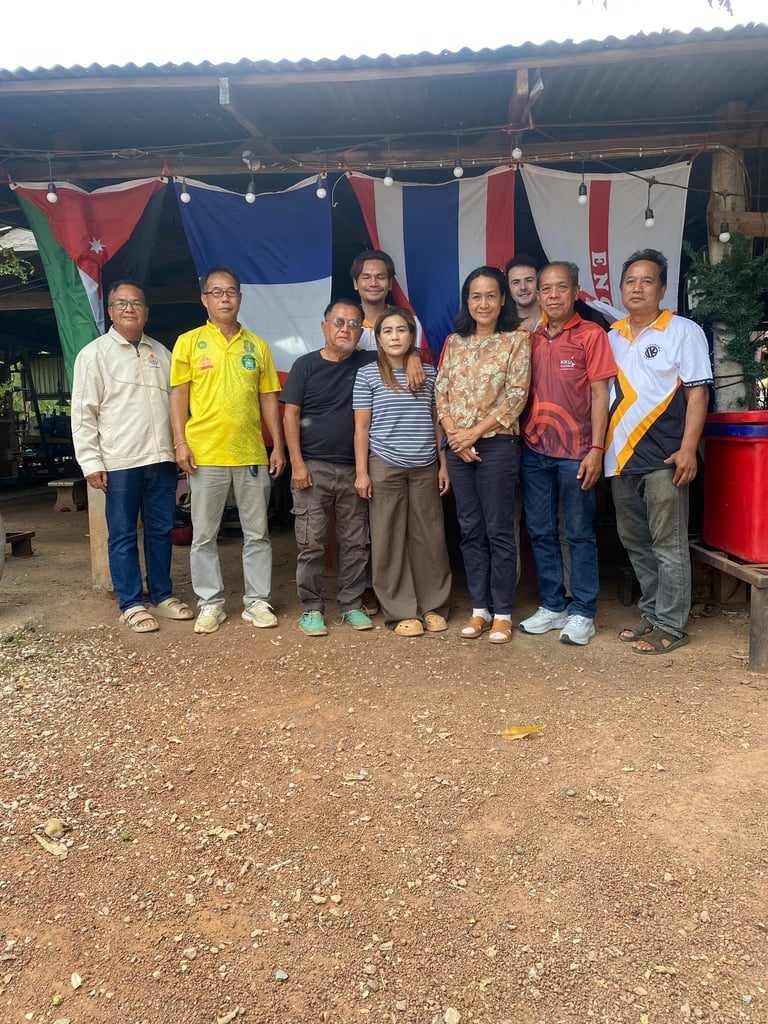
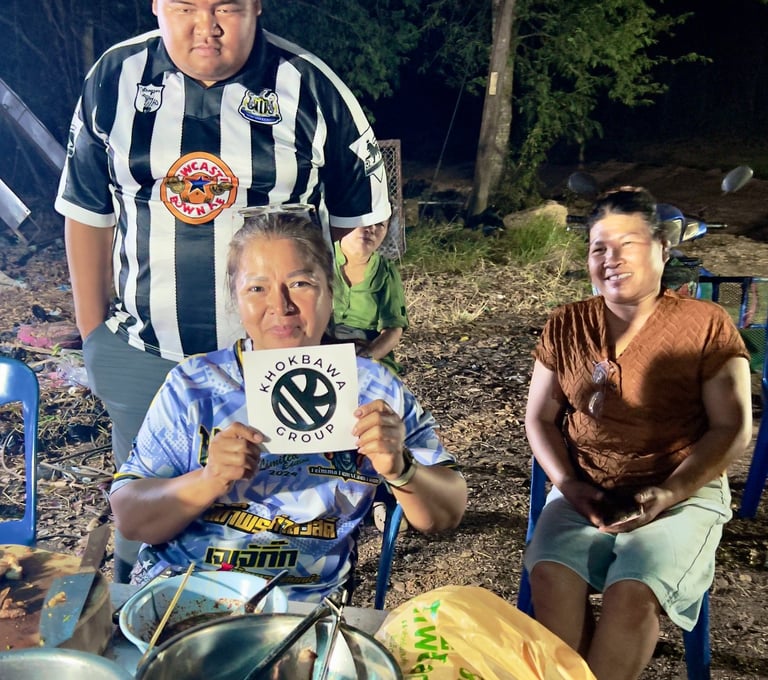
Through partnerships with rural communities and agricultural cooperatives, Khokbawa furnaces can be installed directly where these resources are available.
Local operators run the systems using Khokbawa technology to convert biomass into charcoal and biochar, creating new economic opportunities in rural areas while reducing biomass waste.
This approach allows communities to participate directly in the production of valuable carbon materials.
A Shared Brand and Production Network
While production is decentralized, the products are connected through a shared ecosystem.
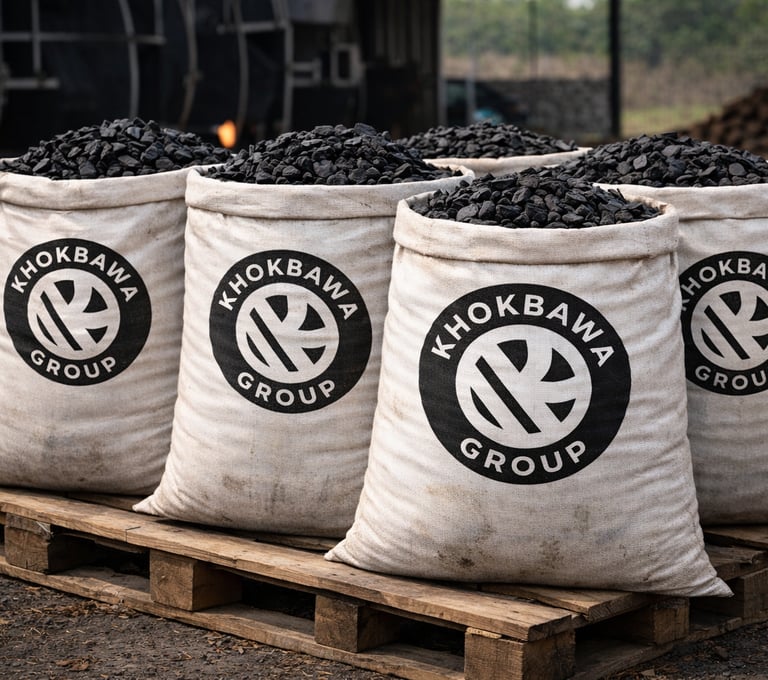
Charcoal produced through the network can be packaged under a common Khokbawa brand, ensuring consistent quality and market recognition.
Biochar produced by partner systems can be collected in bulk and aggregated for agricultural markets and international buyers.
This model allows multiple small producers to operate independently while benefiting from the strength of a shared brand, logistics system, and distribution network.
Technology and Operational Support
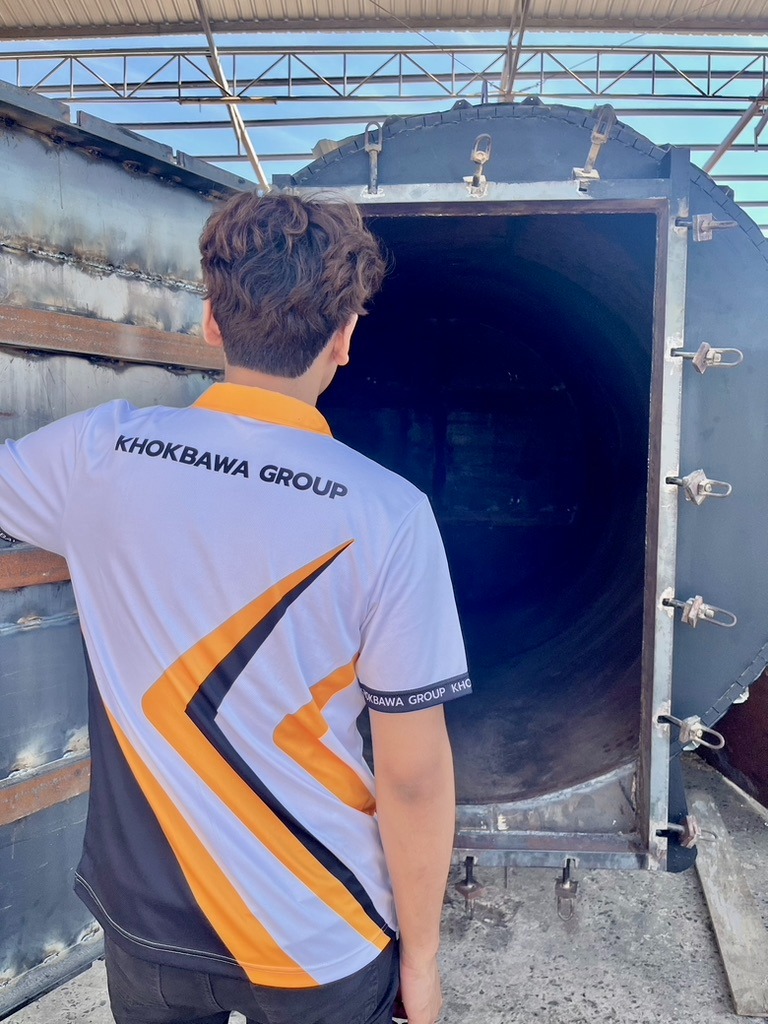
Khokbawa provides the technology and operational framework needed to run these systems successfully.
This includes:
• furnace manufacturing and installation
• operator training and technical support
• maintenance and engineering improvements
• quality standards for charcoal and biochar production
Because the machines are designed and built in-house, Khokbawa maintains full control over technology performance and production standards.
Aggregation and Logistics
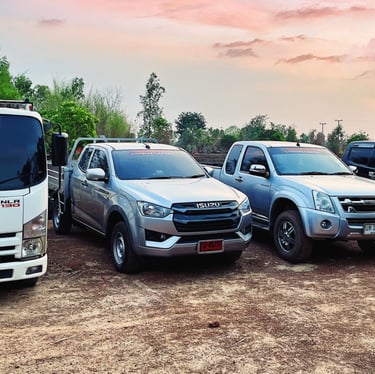
Khokbawa organizes the logistics and market access for products generated by the network.
Charcoal and biochar produced by partner systems can be collected through Khokbawa’s logistics channels and distributed to buyers in:
• restaurant and grilling markets
• agricultural soil improvement markets
• international carbon removal platforms
By centralizing logistics and sales while decentralizing production, the system allows local producers to focus on operations while Khokbawa manages branding, distribution, and market access.


Scaling the Network
Each new furnace increases the total biomass conversion capacity of the network.
As more communities adopt the technology, the production ecosystem expands organically across regions.
This distributed model allows Khokbawa to grow simultaneously as:
• a technology provider supplying machines
• a carbon materials producer
• a national brand for charcoal and biochar products
• and a distributed biomass infrastructure platform


Toward a Nationwide Biomass Network
Khokbawa’s long-term objective is to develop a nationwide network of biomass processing systems across Thailand.
Through collaboration with communities, cooperatives, and local partners, this network could transform agricultural residues into a new industrial ecosystem built around biochar, charcoal, and regenerative agriculture.
By combining local production with centralized logistics, branding, and international market access, Khokbawa aims to help position Thailand as a contributor to the emerging global carbon removal economy.


Supporting Thailand’s Bio-Circular-Green Economy
Khokbawa’s distributed biomass model aligns closely with Thailand’s Bio-Circular-Green (BCG) Economy strategy, which aims to strengthen sustainable agriculture, reduce waste, and develop new bio-based industries.
By transforming agricultural residues into valuable carbon materials, the Khokbawa network helps reduce open burning while creating new economic opportunities in rural communities.
The model also supports the development of local biomass value chains, where agricultural waste can be converted into energy products, soil amendments, and climate solutions.
Through technology development, rural partnerships, and export-oriented production, Khokbawa aims to contribute to Thailand’s transition toward a more sustainable and innovation-driven bioeconomy.








Khokbawa Group © 2026 | All Rights Reserved | Reproduction without permission is prohibited. | [Legal & Compliance]