





Brand Story
The story of Khokbawa begins beside a small charcoal kiln in rural Isan.
In northeastern Thailand, charcoal has long been part of everyday life. Families produced it slowly by hand using traditional earth kilns, turning local wood into fuel for cooking and small businesses.
Growing up in this environment, Manit Lemaitre watched her mother and relatives spend weeks making charcoal to support their family. It was demanding physical work, but it was also a source of resilience and livelihood.
Years later, after living in France, Manit chose to return home. She believed the real problem was not charcoal itself, but the lack of tools adapted to real conditions. If the work could be improved, dignity, income, and stability could improve with it.
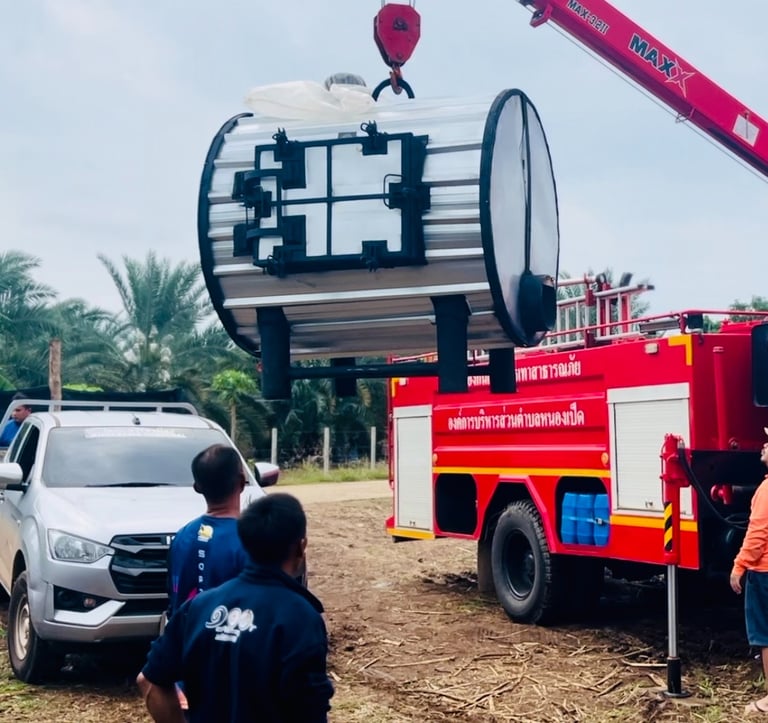
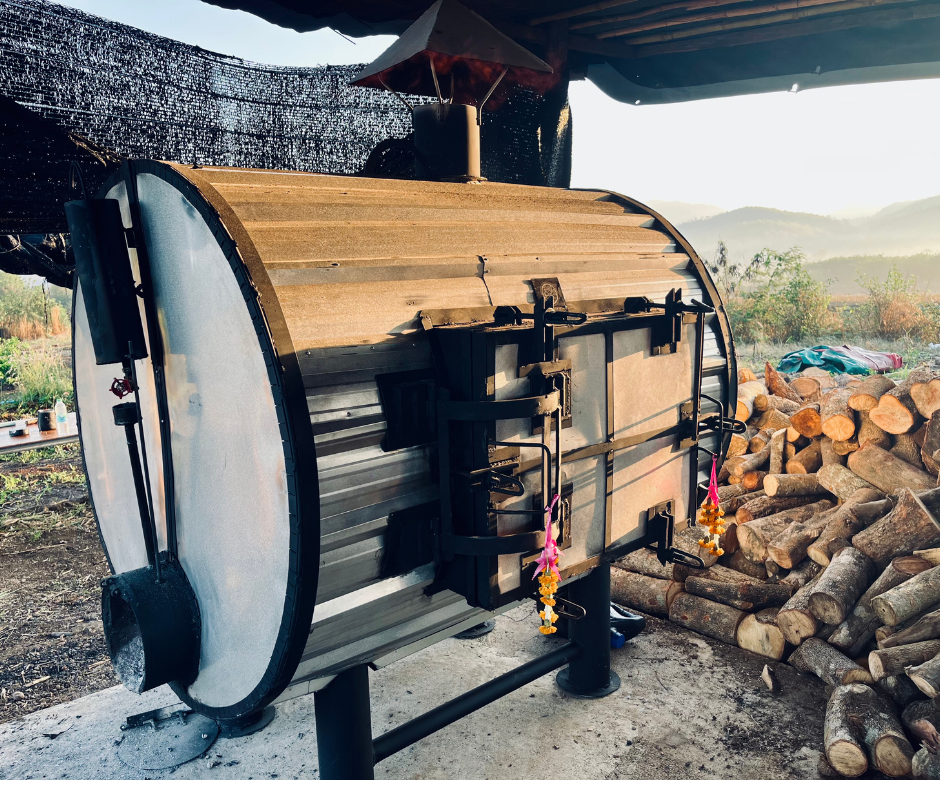
Working alongside her engineer brother and inspired by her mother’s experience, she began designing charcoal machines directly in the field. Months of testing and rebuilding followed. Gradually, the process that once took weeks was reduced to less than two days through efficient, smokeless pyrolysis systems built for daily use.
In 2021, Khokbawa Engineering was officially founded.
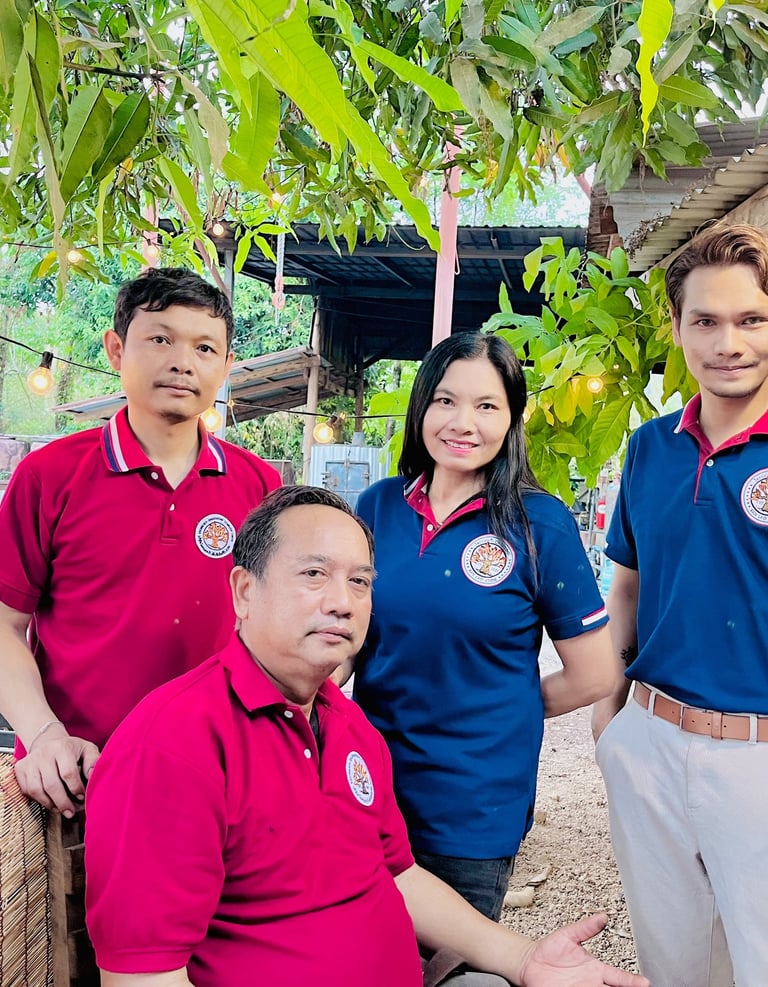
Built Where It Is Used
At Khokbawa, engineering begins where the machines will actually operate.
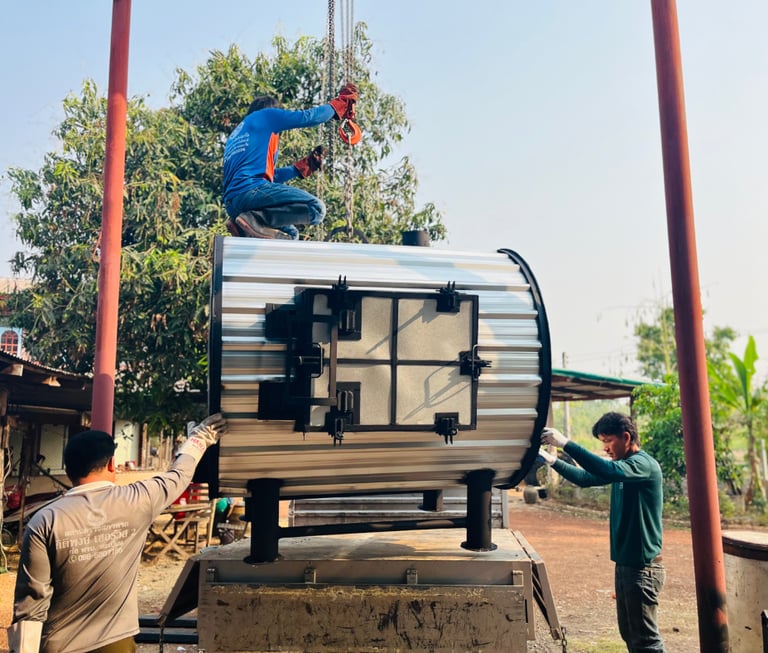
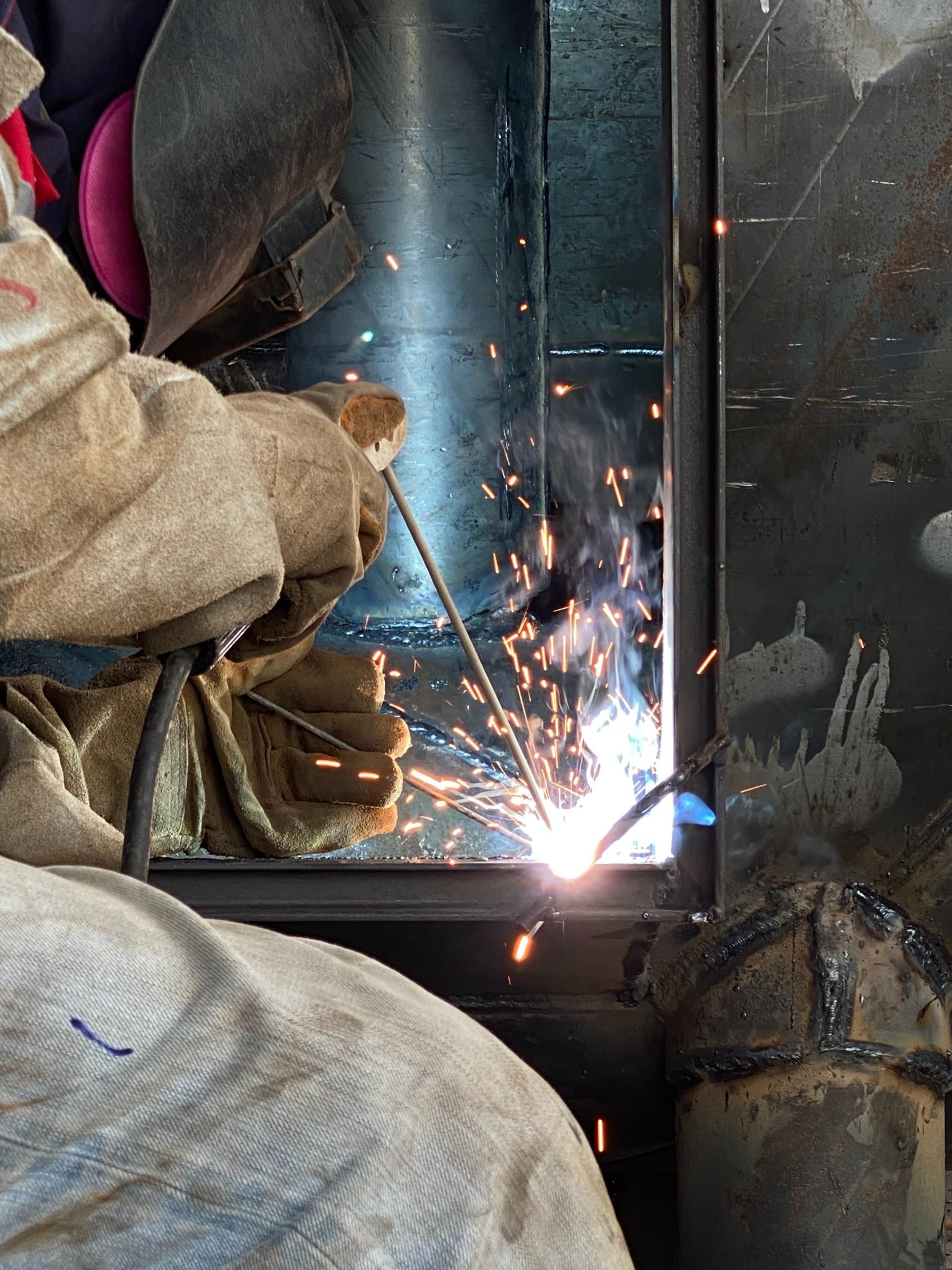
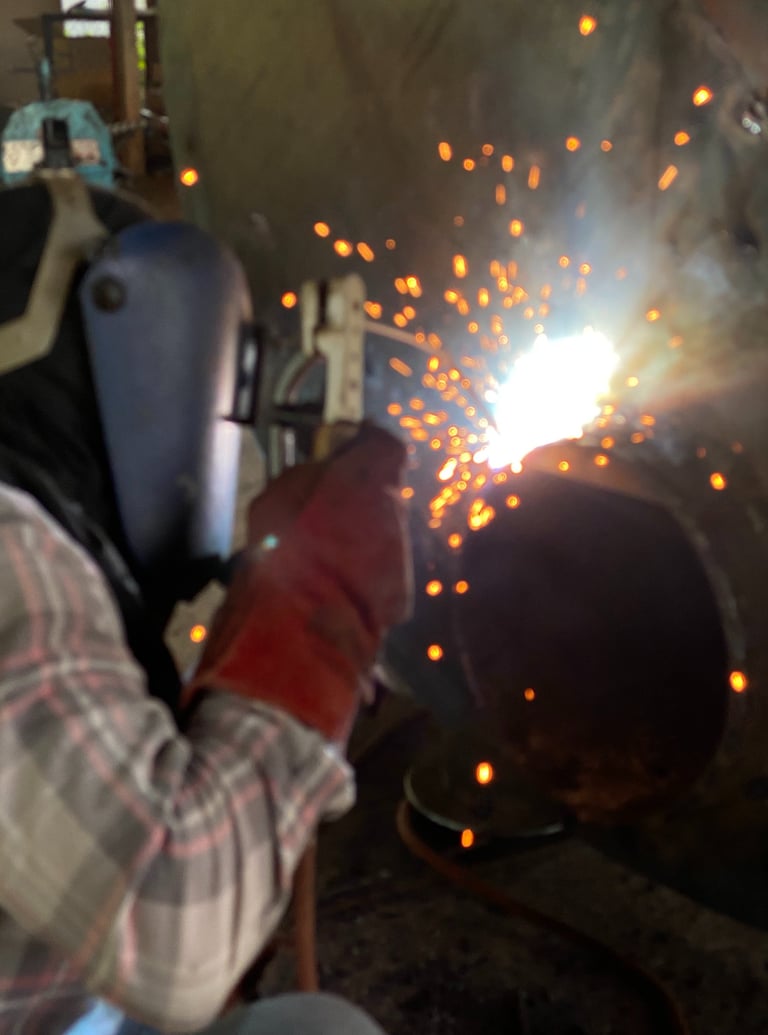
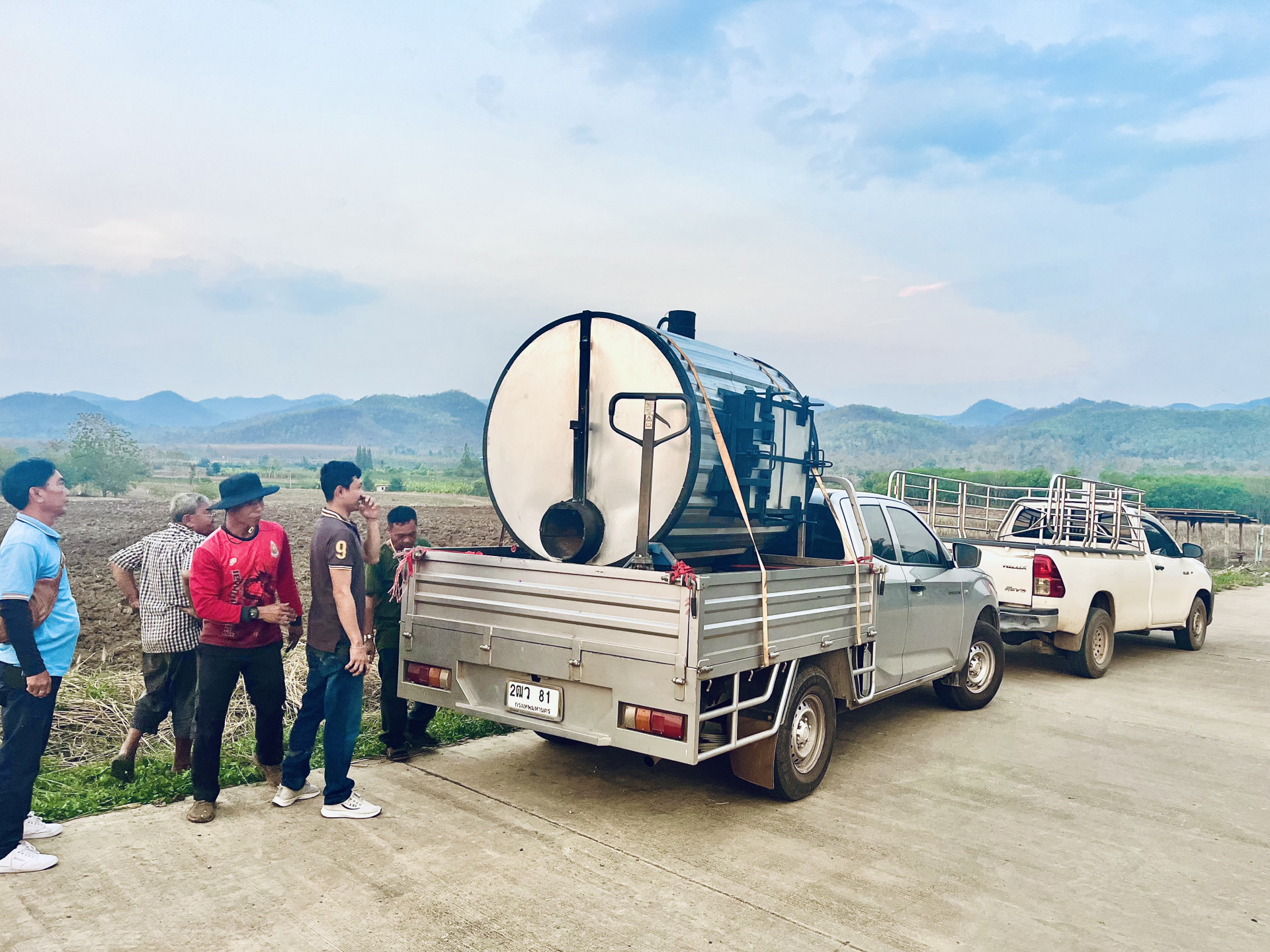
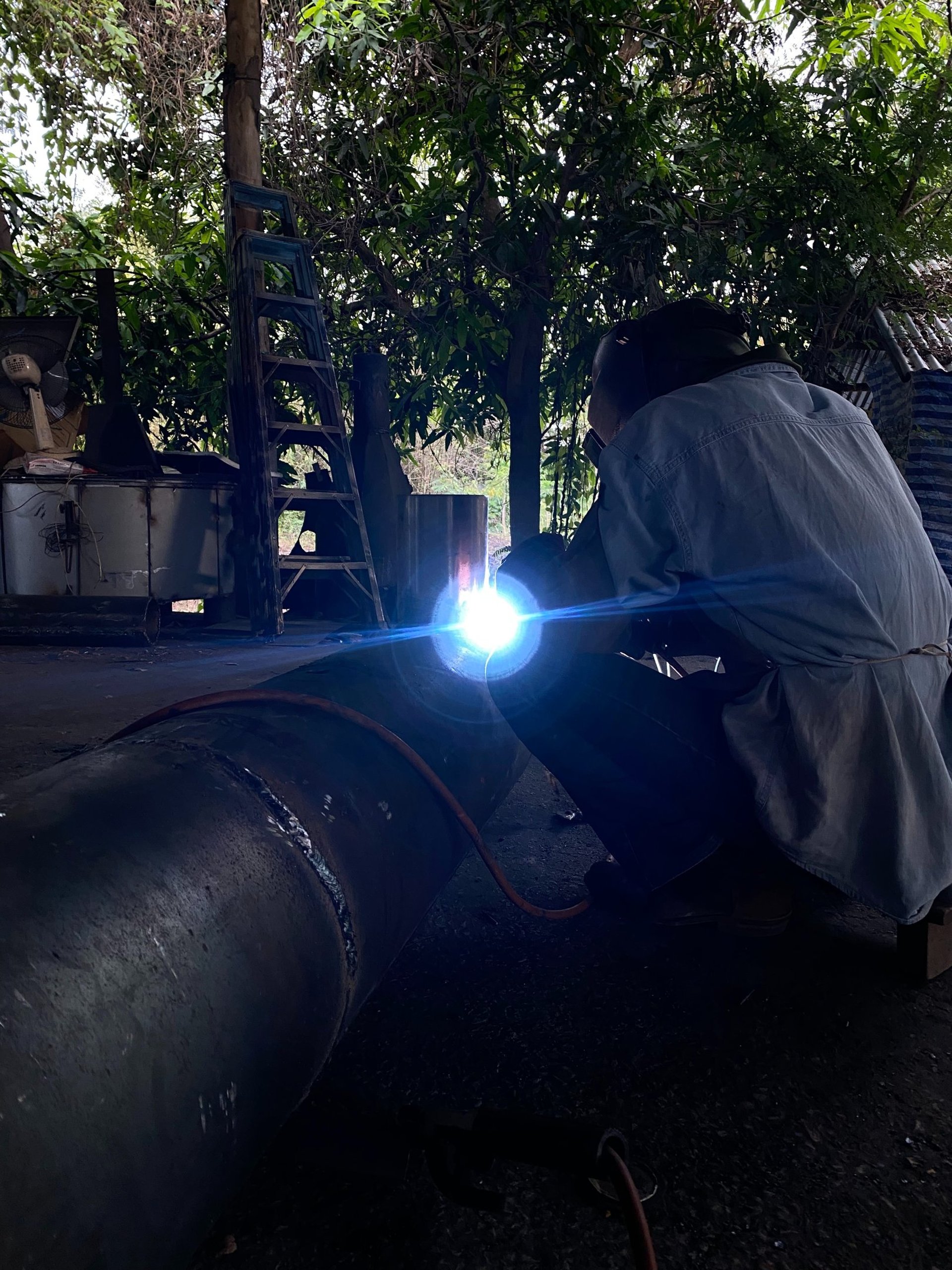
Charcoal furnaces, pyrolysis systems, food ovens, and wood cutting and drying equipment are designed, built, tested, and used in-house. If a machine is too complex, it is simplified. If it fails in real conditions, it is rebuilt.
The workshop operates as a living laboratory where design, fabrication, operation, and maintenance happen together. Technology is judged by one standard: whether it works in the real world.
Engineering That Scales
In 2022, Chumchana Noipaina joined Khokbawa Engineering to lead the company’s technical development.
After more than 30 years working in semiconductor manufacturing at NXP Semiconductors, he brought deep experience in maintaining and operating industrial machinery in high-standard production environments where precision, safety, and reliability are essential.
His career was built around keeping complex machines running every day without interruption. That experience shaped his engineering philosophy: machines must be simple, durable, and reliable in real conditions — not only in theory.
At Khokbawa, this approach helps transform field-tested prototypes into robust systems designed for daily operation.
Today, more than 250 Khokbawa machines operate across seven countries, from small community-scale units to systems capable of producing up to three tons of biochar per day.
Because every system is designed and built in-house, machines can be continuously improved, expanded, and adapted wherever biomass exists.
250+
Machines sold
7
Countries
In
Technology That Creates Opportunity
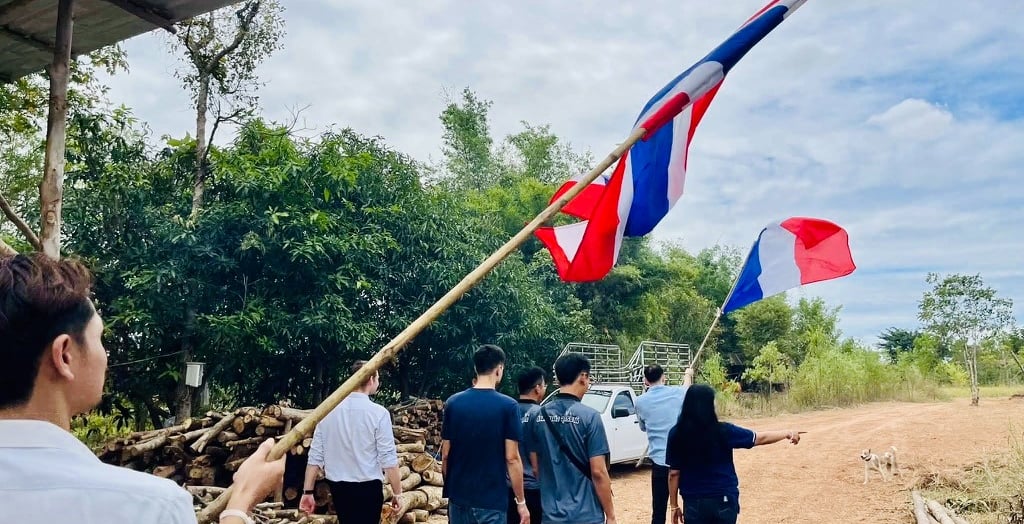
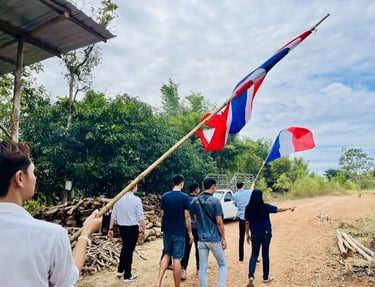
Khokbawa machines are designed so they can be used directly where biomass already exists.
Farmers, small businesses, and local entrepreneurs can operate the systems with minimal training. What was once slow manual work can now become a reliable local industry.
Today, Khokbawa works with multiple communities across Thailand where these systems are creating new economic opportunities in rural areas. Agricultural residues and local wood resources are transformed into valuable products such as charcoal, biochar, and energy.
The model is simple:
local resources, local production, and local jobs.
By making the technology accessible, Khokbawa helps communities turn biomass into long-term livelihoods.
From Biomass to Biochar and Charcoal
With the creation of Khokbawa Group, the work now extends across the full biomass value chain.
In Thailand, agricultural cooperatives and rural communities are adopting Khokbawa machines to produce charcoal locally. The goal is to build a decentralized production network: communities operate the machines while Khokbawa collects and distributes the charcoal under its brand.
International demand is also growing. In the Middle East, Rawabi Farah in Jordan has purchased Khokbawa machines to produce charcoal locally, where demand is strong. At the same time, these partners are also interested in sourcing additional charcoal from Thailand to supply their market.
Biochar production is also expanding toward agricultural applications, with export preparation beginning in Europe, starting with France.
Growing Fast, Built for Scale
In 2024, Matthew Sampawo joined Khokbawa after living and working across four continents. Raised in France in a Thai-French family, he brings international experience to help expand the company’s field-tested engineering beyond Thailand.
Today Khokbawa is entering a new phase of growth. International partnerships are expanding, and biochar exports to Europe are being prepared alongside the development of traceable carbon removal systems based on real production.
By 2026, Khokbawa Group aims to produce 1,000 tons of biochar, with a long-term target of 10,000 tons annually. Because the company designs and builds its own machines, production capacity can scale alongside demand.
More Than a Company
Khokbawa Engineering reflects a simple philosophy:
build by doing,
improve through use,
and turn local resources into lasting value.
What began beside a charcoal kiln in a small village in Isan can now work anywhere biomass exists.
That is Khokbawa Engineering.
The Khokbawa Principles
Simple and durable
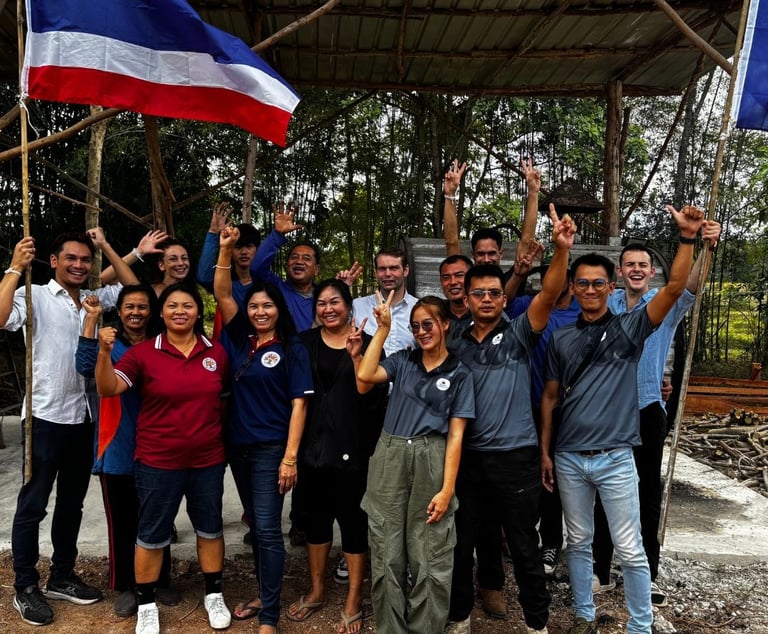
Machines must be easy to operate, repairable, and reliable enough to run every day in real conditions.
Growing with communities
Our systems are designed so farmers and local entrepreneurs can build sustainable livelihoods from the resources around them.
Built in the field
Our technology is designed and improved through real-world use, not only in laboratories or on paper.
We focus on building biomass systems that create lasting value for people, the economy, and the environment.
Long-term value





Khokbawa Group © 2026 | All Rights Reserved | Reproduction without permission is prohibited. | [Legal & Compliance]